58th Annual Conference of the
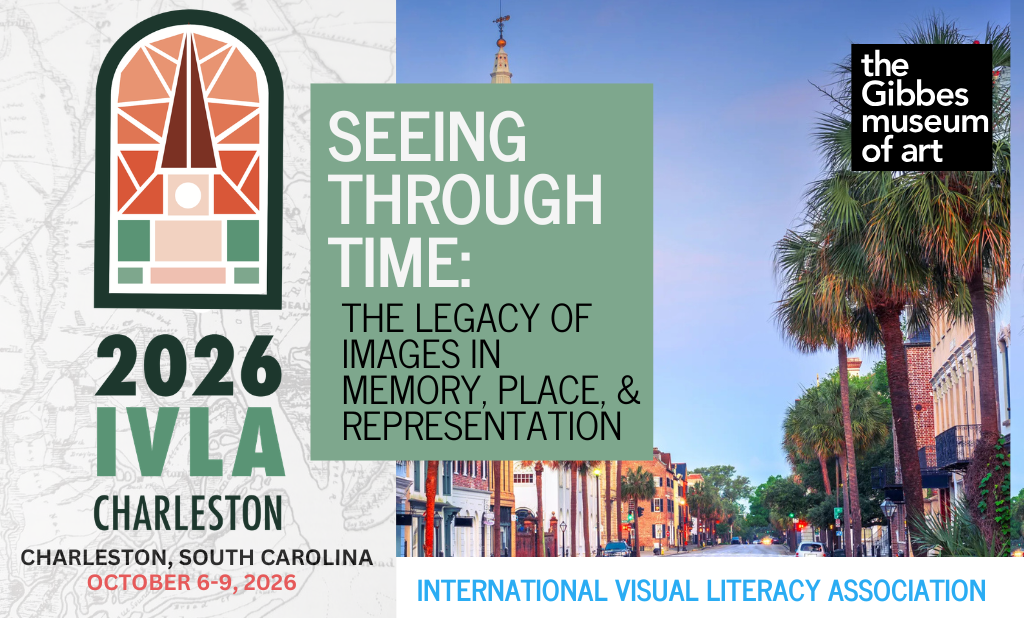
International Visual Literacy Association
October 6 – October 9, 2026
Hosted By:
The Gibbes Museum of Art
Charleston, South Carolina, USA
About the Conference
Conference Theme:
Seeing Through Time: The Legacy of Images in Memory, Place, and Representation
Across cultures and historical periods, visual images have served as powerful vessels of memory, shaping how societies recall the past, narrate the present, and imagine the future. This conference explores the enduring legacy of visual representation and its central role in constructing, preserving, and challenging collective and individual memory, while recognizing how images are rooted in place through landscapes, built environments, cultural traditions, and community narratives that influence their creation and interpretation over time.
In an era saturated with images, from archival photographs and museum collections to digital media, AI-generated visuals, and global social platforms, the ability to decode, question, and critically interpret visual material has become indispensable. Visual literacy provides a framework for understanding not only what images depict but how they shape meaning, influence cultural identities, express ideological viewpoints, and affect public understanding of complex events.
This theme invites scholars, educators, artists, archivists, designers, and media practitioners to examine how visual images operate as mnemonic devices, cultural and ideological tools, and creative acts of representation. It welcomes diverse perspectives on how images endure, transform, or accumulate new meaning as they move through time and across cultural or political contexts. Because seeing through time is shaped by one’s vantage point, this theme encourages reflection on how positionality, worldview, and lived experience influence our interpretation of visual legacies.
Hosting this gathering in Charleston, South Carolina, with sessions at the Gibbes Museum of Art, provides an immersive environment that complements the theme. Surrounded by historically protected architecture, preserved streetscapes, monuments, and a rich lineage of artists, attendees will encounter a living example of how place, history, and representation intersect. Charleston’s layered visual landscape offers a compelling backdrop for exploring how images reflect the narratives we inherit and the futures we imagine.
Tentative Conference Schedule
- Tuesday, October 6: Welcome Reception
- Wednesday, October 7: Full conference day
- Thursday, October 8: Full conference day
- Friday, October 9: Tour opportunities
About The Gibbes Museum of Art:
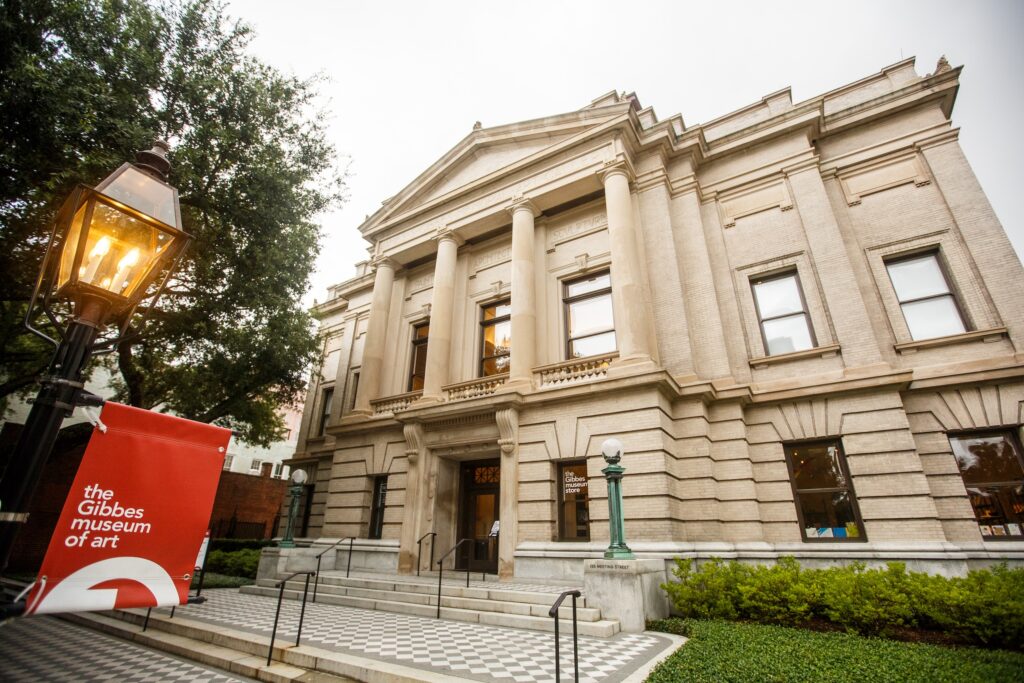
The Gibbes enriches lives through art. Charleston’s only art museum, we are committed to telling the story of Charleston’s ever-changing landscape and its people. Including historical, modern, and contemporary works, our collection spans 350 years and features some of the country’s most celebrated artists. With world-class rotating exhibitions and a dynamic visiting artist residency program, there’s so much to see inside. Set in the heart of downtown Charleston, the Gibbes is a southern museum with a global perspective.
Travel Information
We welcome submissions for the following presentation types that clearly adhere to the conference theme. The call for proposals ended April 15.
Paper Presentations (25 minutes)
- Presentations are 20 minutes, starting with key results from findings, and include a 5-minute open floor Q&A
Campfire Sessions (45 minutes)
- Session starts with a 15-20 minute presentation from a speaker, it then shifts to focusing on gaining key participation from the audience. The presenter turns facilitator allowing attendees to answer questions and provide comments.
Panel Discussions (45 minutes)
- Presentations are moderated, multi-speaker events where experts discuss a topic, offering diverse perspectives in a structured yet conversational format, moving beyond individual speeches to foster interactive learning for the audience, and a guided discussion with Q&A.
March 1 – Call for Papers
April 15 – Deadline for Proposals
May 15 – Notifications of acceptance, Scholarship Applications & Award Nominations Open
June 1 – Scholarship Applications & Award Nominations due, Registration Opens
June 15 – Scholarship & Award Notifications
July 15 – Early Bird/Presenter Registration ends
Charleston International Airport is an airport located in North Charleston, South Carolina, United States. The airport is located in North Charleston and is approximately 12 miles (19 km) northwest of downtown Charleston.
You can get from Charleston Airport (CHS) to downtown via ride-sharing services like Uber, traditional taxis, private car services, or public transportation. The most direct options are rideshares, taxis, and private car services, which take about 15 minutes, while a public bus route is a more budget-friendly but longer option.
Ride-sharing and taxis
- Uber: Follow the signs for the ride-share pickup area outside of Baggage Claim. The pickup area is located across both roadways and to the right of the last sidewalk, according to Charleston International Airport.
- Taxis: Taxis are available through companies like the Airport Limo-Taxi Association.
- Private car services: Companies like Coastal Limousine of Charleston and Going Coastal Transportation offer private shuttles and luxury vehicles.
Public transportation
- CARTA Bus: The Charleston Area Regional Transportation Authority (CARTA) operates bus routes that serve the airport and the downtown area.
The address for the Gibbes Museum of Art is 135 Meeting St, Charleston, SC 29401.
While there is no specific conference hotel, the hotels listed below are all within walking distance to the Gibbes.
- Andrew Pinckney Inn
- Located in the heart of the historic district and recently restored, the Andrew Pinckney Inn is at the center of everything Charleston has to offer. With an ideal downtown location, find yourself just steps away from the lively atmosphere of renowned restaurants and shops that surround Charleston’s historic City Market. Settle into one of our 41 elegant, yet casual rooms.
- Trip Advisor Reviews
- Church Street Inn Historic Charleston, an Ascend Collection Hotel
- The Church Street Inn Historic Charleston, an Ascend Collection™ Hotel, offers townhouse-style accommodations in downtown Charleston. Located at the corner of Church and Market Streets, making it easy to walk to a variety of shops and restaurants, the Historic Charleston City Market, College of Charleston, Dock Street Theatre, city ghost tours and much more. Hotel amenities include free WiFi throughout the hotel and an onsite fitness center. There are 31 rooms.
- Trip Advisor Reviews
- Indigo Inn
- A hidden gem in the historic Ansonborough neighborhood features 40 beautifully furnished guest rooms surrounding a tranquil and inviting European-style atrium. The extensive list of guest services at Indigo Inn includes daily complimentary breakfast and evening wine and cheese receptions.
- Trip Advisor Reviews
- Kings Courtyard Inn
- Blending the intimacy of a bed & breakfast with the thoughtful amenities and personalized service of a boutique hotel, the Kings Courtyard Inn is a rare find on Charleston’s celebrated King Street. Tucked within one of the city’s oldest buildings, this charming inn in the heart of the Antiques District features 41 freshly updated guest rooms and suites, including some with original fireplaces, four-poster mahogany beds, and views of leafy interior courtyards.
- Trip Advisor Reviews
- Charleston City Market
- The Charleston City Market is one of the nation’s oldest public markets and the cultural heart of Charleston. It is home to more than 300 entrepreneurs, and open every day of the year except December 25th.
- Charleston City Day Market
- The Day Market is open every day of the year except Christmas Day. Our current hours for the open air market and Great hall are 9:30am- 5pm everyday.
- Charleston City Night Market
- The Night Market is the largest art market in the Southeast. Featuring 100 talented local artists and craftspeople—including 25 new artists—the market offers a festive atmosphere with live entertainment every Friday and Saturday evening from March through December.
Hours: Friday & Saturday Night, 6:30 PM – 10:30 PM
- The Night Market is the largest art market in the Southeast. Featuring 100 talented local artists and craftspeople—including 25 new artists—the market offers a festive atmosphere with live entertainment every Friday and Saturday evening from March through December.
- Fort Sumter National Monument
- Fort Sumter, an island fortification located in Charleston Harbor, South Carolina, is most famous for being the site of the first battle of the American Civil War. Originally constructed in 1829 as a coastal garrison, U.S. Major Robert Anderson occupied the fort in December 1860 following South Carolina’s secession from the Union, initiating a standoff with the state’s militia forces. When President Abraham Lincoln announced plans to resupply the fort, Confederate General P.G.T. Beauregard bombarded Fort Sumter on April 12, 1861, kicking off the Battle of Fort Sumter.
- International African American Museum
- The International African American Museum (IAAM) in Charleston represents the only curated museum in South Carolina that interprets the state’s pivotal role in the Civil Rights Movement and does so by illustrating the events that led to it.
- IAAM is located on historic Gadsden’s Wharf in downtown Charleston on the Cooper River. The wharf was the last and most important disembarkation point for Africans during the trans-Atlantic slave trade in North America. Completed in 1772 by slave labor, the wharf was most active between 1783 and 1808 when an estimated 100,000 African men, women and children arrived and were sold into slavery. The 840-foot wharf, at the time the largest in North America, could accommodate up to six ships at once.
- The $120 million museum is built on pillars so as to not touch this “sacred ground.” It features nine galleries that contain nearly one dozen interactive exhibits of more than 150 historical objects and 30 works of art.
- Old Slave Mart Museum
- Established in 1938, the Old Slave Mart Museum is Charleston’s oldest museum of African American history and the first museum on the history of slavery in the United States. Located in the heart of downtown Charleston, the museum is housed in a portion of the city’s last major slave market. Today, the Old Slave Mart Museum is owned and operated by the City of Charleston and is dedicated to sharing the story of the domestic slave trade.
- Penn Center
- Located on beautiful St. Helena Island, at the very heart of Gullah culture, surrounded by glimmering marshes, and nestled beneath the silvery moss-draped limbs of massive live oaks… is Penn Center.
- The campus of the former Penn School, one of the nation’s first schools for formerly enslaved people, is one of the most significant African American institutions in existence today. This historic and cultural institution is a National Historic Landmark District and comprises two of the four sites in Reconstruction Era National Park.
- South Carolina Aquarium
- The South Carolina Aquarium, located in downtown Charleston, South Carolina, opened on May 19, 2000. Located on the historic Charleston Harbor, visitors can enjoy views of the waterfront, including the USS Yorktown and Ravenel Bridge. The Aquarium is a 501(c)(3) nonprofit organization and is accredited by the Association of Zoos and Aquariums (AZA). More than 5,000 animals reside in dozens of exhibits spanning two stories. The largest exhibit, the Great Ocean Tank, holds 385,000 US gallons (1,460,000 L) and stands at 42 feet deep, making it the deepest tank in North America. Additional experiences include multiple touch tanks, a sea turtle hospital and three open-air exhibits. Visitors can see various native South Carolina species including a bald eagle, river otters, alligators, cownose rays, sea turtles, sand tiger sharks, roseate spoonbills, jellyfish and more.
Registration rates are listed below. Please reach out if you are from a low-income country and these registration rates are a barrier at attendance.
Early bird Member | $300 |
Early bird Non-Member | $375 |
Regular Registration, Member | $400 |
Regular Registration, Non-Member | $475 |
One-day pass | $100 |
Student non member | $200 |
Student IVLA member | $150 |
Retired or part-time workers | $200 |
Conference Planning Chairs
Becca Hiester – Conference Co-Chair
Director of Education and Programs
The Gibbes Museum of Art
Katie Greer – Conference Co-Chair
IVLA Vice-President
Justin Baker-Rojas – Conference Co-Chair
IVLA Director of Communications